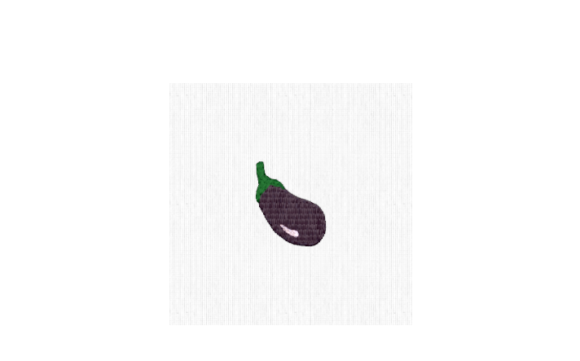
My Professional Review of the Eggplant Mini Embroidery Design
Whenever I evaluate a new embroidery file for practical use, I don’t just look at the preview. I think about how it will actually stitch out, how it will feel on fabric, and where it truly belongs in the world of handmade products. Today, I’m putting the Eggplant Mini design through that real-world lens.
A First Impression: More Than Just a Vegetable
The immediate charm of this design is its personality. It’s not merely a graphic of an eggplant; it’s a character. The shape is friendly and rounded, with a level of detail that suggests it was drawn with a smile. This isn’t a dense, realistic illustration—it’s a cute little accent, as the description rightly says. The mood it creates is playful and wholesome, leaning into a kitchen or garden theme without being overly rustic. It feels like it would be a welcome, unexpected friend on a everyday item.
This visual personality tells me it naturally belongs to projects where a touch of whimsy is appreciated. It’s not for formal branding or minimalist apparel. It’s for the products that celebrate small joys: a cheerful kitchen towel, a welcoming apron, a playful nursery item.
The Perfect Project Partners for this Mini Design
In my work, I constantly match designs to products. Here’s where I see the Eggplant Mini shining. Imagine a custom order for a boutique kitchen towel set. A client wants a personalized gift for a friend who loves cooking. Stitching this onto a crisp linen towel creates an instant story—it’s unique, handmade, and full of character. It elevates a utilitarian object into a personalized gift.
For small shop merchandise, this design is a gem. An Etsy seller specializing in baby embroidery could use it on a organic cotton bib or a soft blanket for a subtle, food-themed touch. It’s small enough to not overwhelm a tiny garment but distinct enough to be noticed. On a canvas tote bag, it becomes a signature detail for a farmer’s market regular. On a simple cotton apron, it’s the perfect focal point for a home cook.
I’m also thinking about embroidered patches. Its clear, contained shape makes it an ideal candidate for a standalone patch that could be applied to a sweatshirt or a cap. This opens doors for craft fair products and customizable apparel. The design’s strength in these applications lies in its clarity; the lines are defined, and the forms are solid, which translates well into a clean, recognizable finished product.
Where Caution and Skill Come Into Play
No design is universally perfect, and a thoughtful embroiderer considers limitations. The Eggplant Mini, with its presumably small size (given the “mini” moniker), requires careful handling on certain surfaces.
First, hoop size matters. On very small hoops, any tiny detail needs to be scrutinized. Before running this on a client’s delicate item, I would always stitch it out on scrap fabric of the same type. This is non-negotiable for maintaining customer trust and professionalism.
Fabric texture is another key consideration. Stitching this onto a thick, napped fabric like a fleece blanket would require careful stabilizer choice to keep those smooth curves crisp. On stretchy fabric like a t-shirt, you’d need a robust stabilizer to prevent distortion, especially if the design includes areas of satin stitch or fill stitch that could pull.
I would also be mindful of using it on dark fabric. The design’s appeal depends on contrast. You’d need to choose thread colors that pop against a dark background, possibly testing a few combinations. This isn’t a drawback; it’s an opportunity for customization that can increase the product’s value.
For items needing frequent washing, like kitchen linens or baby clothes, the stitch density should be checked. A overly dense design can feel stiff and may wear differently. From the preview, the Eggplant Mini looks balanced, but a test stitch will confirm its durability and comfort on the fabric.
Turning a Digital File into a Beloved Product
The real magic happens when a digital embroidery file becomes a physical object that someone buys, uses, or gives. The Eggplant Mini affects this transformation directly.
Its visual appeal translates into stitching clarity. A clean stitch-out with smooth outlines makes a handmade product feel expertly crafted, not amateurish. This boosts brand consistency for a small business owner selling a series of food-themed items. For a creative entrepreneur making holiday embroidery gifts, it adds a specific, thoughtful touch that generic designs lack.
Think about buyer engagement on an Etsy listing. A well-executed embroidery of this design on a tea towel, shown in a clean printable mockup or a real photo, tells a story. It suggests care, theme, and personality. It answers the “why” for a customer: why this towel, why this gift. That’s the power of a good embroidery design in commercial embroidery projects.
My Practical Notes Before You Hoop It Up
- Test First: Always run the Eggplant Mini on a scrap of your target fabric. Check for puckering, thread breaks in small details, and overall feel.
- Contrast Check: Evaluate your thread color choices against both light and dark fabric backgrounds. Sometimes a slight color shift makes the design pop more.
- Stitch Density Review: Look at the stitched sample. Is it too stiff for a soft baby blanket? Is it robust enough for a bag that will see wear?
- Hoop Size Confirmation: Ensure the design size fits comfortably in your intended hoop without forcing excessive tightening.
- Small Detail Inspection: Pay attention to any tiny corners or curves. These can be test points for your machine’s performance and your stabilizer choice.
- Mockup Versatility: Try visualizing it in black and white mockups to see how the form holds up without color, which is great for understanding its core shape.
- Stabilizer Strategy: Match your stabilizer to the fabric—no one solution works for a cotton towel, a sweatshirt, and a cap.
- License Clarification: Before selling any finished items or including this file in your digital product shop, confirm the licensing terms for the design. This is crucial for digital product sellers and commercial projects.
Ultimately, the Eggplant Mini isn’t just another Food category file. It’s a thoughtfully composed little character waiting for a project. Its value isn’t in its complexity, but in its ability to add a specific, cheerful accent to a wide range of items. From a craft business apron to a personalized baby gift, it brings a smile. That’s the kind of design asset that, with careful application, turns a simple embroidery project into a product people genuinely love.