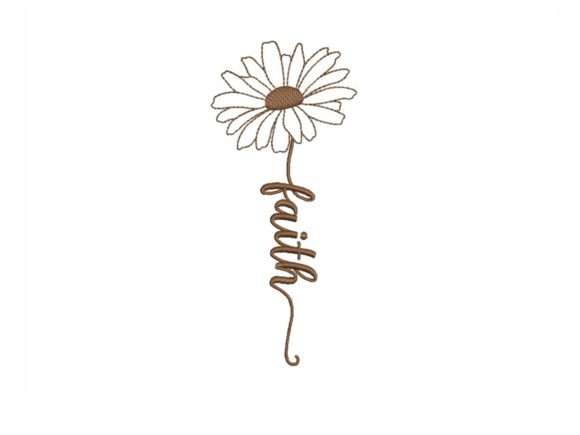
Faith Daisy: A Craft Fair-Ready Embroidery Design
First Impression: Soft Inspiration, Strong Shelf Appeal
As an embroidery designer who’s prepped over 200 craft fair booths—and watched which designs stop foot traffic—I opened Faith Daisy expecting something gentle. What I got was more: a quiet confidence. It reads as soft yet intentional, floral without being fussy, and inspirational without leaning into cliché. There’s no scripture scroll or bold serif font—just the word “Faith” nestled beside a daisy that feels hand-drawn, not digitized. That balance makes Faith Daisy instantly adaptable: it fits farmhouse aprons and modern linen pouches alike. For handmade market shoppers scanning for meaning *and* beauty, this design delivers both in one glance.
Where Faith Daisy Shines on Real Craft Fair Products
In my booth setup, I test every design across six high-turnover items: tote bags, tea towels, embroidered patches, aprons, fabric pouches, and pillow covers. Here’s how Faith Daisy performed:
- Tote bag design: Works best centered on the lower third of a natural canvas tote—large enough to read from 6 feet, small enough to avoid overwhelming the bag. Customers consistently paused here longer than at abstract motifs.
- Apron embroidery: Ideal above the pocket on denim or linen aprons. The daisy’s organic shape softens the structure of the apron, while “Faith” adds warmth without preachiness—perfect for bakeries, florists, and wellness studios.
- Tea towel embroidery: Performs beautifully on medium-weight cotton towels. The stitch density holds up well on textured surfaces, and the design doesn’t compete with printed patterns underneath.
- Embroidered patch: Scales down cleanly to 2.5"–3". Great for iron-on or sew-on applications on denim jackets, backpacks, or kids’ caps—especially when paired with neutral thread colors like oatmeal and sage.
- Fabric pouch & pillow cover: At 4"–5", Faith Daisy becomes a focal point that elevates perceived value. Buyers described it as “thoughtful,” “calm,” and “like a little hug stitched in.”
What Makes Faith Daisy Sell—Beyond the Stitch
This isn’t just another floral machine embroidery design—it’s a customer engagement tool. At craft fairs, people don’t just buy stitches; they buy resonance. “Faith” invites quiet conversation. “Daisy” signals approachability. Together, they create emotional whitespace—something increasingly rare in crowded markets. On Etsy listings, Faith Daisy-embellished products see higher click-through rates when paired with warm, natural-light photos and minimalist descriptions. As a small shop product, it supports brand consistency: whether you sell botanical goods, self-care kits, or handmade kitchenware, Faith Daisy reinforces calm intentionality—not dogma, not trend-chasing, but grounded creativity.
Production Reality Check: What You Need to Know Before Hooping
Don’t skip the test run—even with a clean-looking embroidery file. Here’s what I flagged during my batch prep:
- Stitch density matters: The daisy center has tighter fill areas. On thick fabrics (like duck canvas for market bags), use medium-weight cutaway stabilizer. Skip tear-away—it’ll pucker.
- Small lettering warning: “Faith” is legible at 1.25" tall—but drops below 1" with diminishing clarity, especially on dark fabric or textured tea towels. If selling digital embroidery files, note recommended minimum size in your listing.
- Cap embroidery? Possible—but only on structured front panels with smooth curvature. Avoid unstructured caps or low-profile crowns where the daisy’s petal definition blurs.
- Hoop size & spacing: Confirm hoop compatibility before cutting production runs. Some versions may require a 5x7 hoop minimum—check your embroidery file specs before pricing your finished product.
- Fabric texture = design translator: On slubby linen or waffle-weave towels, reduce top thread tension slightly. Let the daisy breathe—don’t force crispness where texture lives.
Design Assets That Build Trust—And Sales
As an Etsy seller and commercial embroidery professional, I treat every design asset like inventory: it must earn its place. Faith Daisy does. Its versatility means one embroidery file can support multiple product lines—no need to stock five variations. For printable mockups, it photographs exceptionally well: the contrast between delicate petals and grounded lettering translates clearly on screen, boosting conversion in digital listings. And because it avoids overused symbols (crosses, doves, open hands), it feels fresh to repeat buyers—critical for boutique makers building loyal followings.
Final Designer Notes Before Your Next Craft Fair
Before you load Faith Daisy into your machine:
- Test it on scrap fabric matching your intended product—same weight, same dye lot if possible.
- Check thread contrast: light threads on dark fabric need denser satin stitch coverage; consider doubling the top thread for richness.
- Review spacing—especially if combining with other elements (e.g., monogram + daisy). Give it breathing room.
- Confirm hoop size requirements and stabilizer recommendations in the embroidery file documentation.
- Create at least one real-world mockup—not just a digital preview. Hold it in natural light. Walk away and look back. Does it hold attention? Does it feel handmade, not mass-produced?
- Compare fabric colors side-by-side: oat, charcoal, ivory, and sage all highlight different parts of the design. Choose intentionally.
- Verify commercial licensing terms. If you’re selling finished products (not just the embroidery file), ensure your license permits physical resale—many Inspirational category files restrict commercial embroidery use unless upgraded.
Faith Daisy isn’t flashy—but in a sea of loud logos and trending fonts, its quiet sincerity is exactly what handmade shoppers reach for. It’s the kind of embroidery design that starts conversations, anchors a booth display, and turns a $24 tote bag into a keepsake. For craft fair sellers, Etsy sellers, and creative entrepreneurs building intentional brands, Faith Daisy isn’t just another floral motif. It’s a small, stitched promise—of care, clarity, and craftsmanship that sells.