Toy Whirligig: A Playful Spark for Boutique Sweatshirts
As an embroidery designer who’s developed over 300 commercial designs for small apparel brands—and shipped limited drops for boutique clients from Brooklyn to Brisbane—I approached Toy Whirligig with both curiosity and quiet skepticism. Not every “bright children’s toy” translates well to sweatshirt embroidery. Some designs read like busy clipart when stitched; others lose charm at 3.5 inches wide. But Toy Whirligig surprised me—not with complexity, but with its confident, joyful restraint.
First Impression: Bright, Balanced, and Built for Fabric
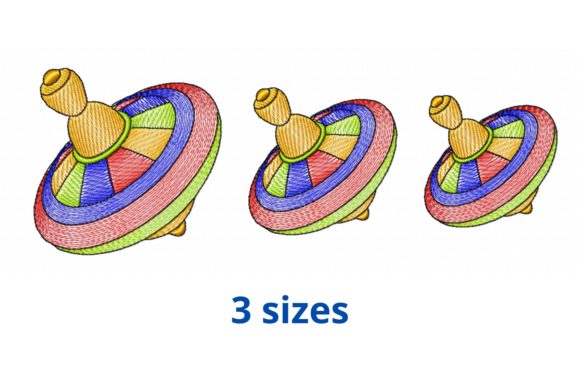
The moment I loaded the Toy Whirligig embroidery file into my software, I noticed something immediate: rhythm. It’s not symmetrical, but it *feels* anchored—like a wind-up toy mid-spin, with swirling arms radiating outward in staggered arcs. The multi-colored palette isn’t random; it’s layered with intention. Reds, sunflower yellows, sky blues, and mint greens sit side-by-side without visual shouting—each thread color chosen to pop against neutral fabric, yet harmonize on pastel heathers.
This isn’t a flat icon—it’s a stitching personality. Satin-stitched curves give softness to the whirligig’s arms, while tight fill stitches in the central hub add subtle texture and durability. There’s no excessive underlay or over-trimming—just clean transitions and thoughtful density. That matters. On thick French terry or fleece-backed sweatshirts, high stitch density can cause puckering; low density risks thread loss after washing. Toy Whirligig lands right in the sweet spot: dense enough to hold shape, open enough to breathe with the fabric.
Sweatshirt Embroidery in Action: Where It Shines (and Where to Pause)
I tested Toy Whirligig across five real-world applications common to small shop product development:
- Hoodie chest placement (3.25” wide): Crisp, legible, and full of movement—even at this modest scale. The swirl reads as kinetic, not cluttered. Perfect for minimalist branding on oversized hoodies.
- Dark fabric (charcoal or navy sweatshirts): The bright thread colors lift off the background beautifully. No need for white underlay—unless your stabilizer choice is too light. More on that below.
- Pastel heather blends (dusty rose, oatmeal, sage): Here, Toy Whirligig becomes quietly sophisticated. The playfulness remains, but it reads as curated—not juvenile. Ideal for gender-neutral baby collections or modern maternity loungewear lines.
- Sleeve accent (2.5” version): Works if resized carefully. Avoid shrinking below 2.25”—the inner hub detail starts to blur. Always test stitch before bulk production.
- Back design (centered, 5.5”): Bold, memorable, and surprisingly elegant. This is where Toy Whirligig transforms from “cute baby motif” into signature boutique branding—especially paired with a small embroidered tagline beneath (e.g., “Made with Spin & Care”).
Practical Designer Notes: What You’ll Actually Need to Know
Before you drop Toy Whirligig into your next Etsy listing or wholesale line sheet, here’s what your machine—and your customers—will care about:
- Stabilizer: Use medium-weight cutaway for standard cotton-blend sweatshirts. For ultra-soft fleece or brushed-back fabrics, add a light tear-away topper—especially over satin-stitched curves—to prevent thread snagging during wear.
- Fabric texture: Toy Whirligig handles low-pile textures well, but avoid heavy bouclé or highly textured loopback unless you increase underlay by 15%. Test first.
- Hoop size & placement: Designed for standard 4x4 hoops, but verify your file’s exact dimensions. If placing near a seam or pocket edge, leave ≥⅜” clearance—swirls expand slightly during stitching due to tension dynamics.
- Washing durability: The balanced stitch density and minimal jump stitches mean Toy Whirligig holds up through gentle cycles. Recommend cold wash + lay-flat dry in product care tags—it reinforces handmade integrity.
- Small-size readability: At 2.75”, all elements remain distinct. Below that? The center hub softens. Not a flaw—just a boundary. Respect it.
Why Toy Whirligig Builds Brand Trust—Not Just Adornment
For Etsy sellers and small shop owners, every stitch is a silent brand promise. Toy Whirligig delivers three intangible values that convert browsers into repeat buyers:
- Visual recognition: Its asymmetrical spin creates instant recall. Customers don’t just see “a toy”—they remember *that* whirligig. That’s logo-level memorability, without needing a custom wordmark.
- Handmade presentation: Unlike vector-based prints, the slight variation in thread sheen and stitch texture tells a story of craft. Paired with quality fabric and clean finishing, Toy Whirligig elevates a $68 sweatshirt into a keepsake—not fast fashion.
- Emotional alignment: It feels warm, inclusive, and gently whimsical—not saccharine or overly gendered. That resonates across audiences: new parents seeking heirloom-quality babywear, gift shoppers wanting joy-with-intention, and even adult fans of tactile, analog design.
Final Thought: A Design That Grows With Your Boutique Brand
Toy Whirligig isn’t just a machine embroidery design for baby clothes or crib sides—it’s a versatile design asset. Repurpose it across your ecosystem: shrink it for woven labels, invert thread colors for seasonal variants (think berry tones for fall), pair it with hand-lettered embroidery for custom names, or use it as a focal point in printable mockups for social ads.
It works because it doesn’t try to do everything. It spins. It delights. It lands cleanly on fabric. And for small creative businesses—where every design decision impacts margins, messaging, and momentum—that kind of focused clarity is rare. If you’re curating a collection of cozy, considered apparel, Toy Whirligig isn’t just decoration. It’s your next quiet signature.
Pro tip: Always verify hoop size, thread count, and compatible machines before ordering—details like exact file formats and license scope aren’t listed here, but they’re essential for commercial embroidery. When in doubt, request a stitch-out sample from your digitizer or vendor before committing to bulk production.