Sheep with Light Coat Review
A Calm, Charming Farm Animal Design That Stitches Cleanly
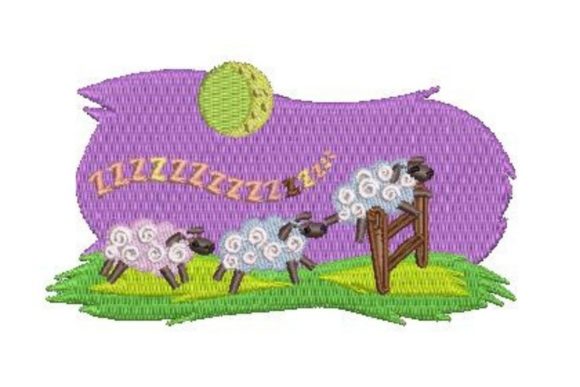
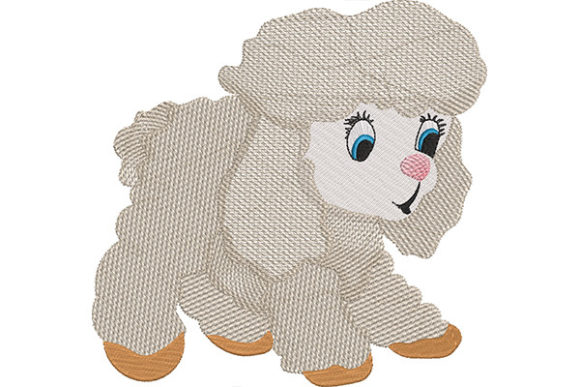
As an embroidery designer who’s stitched over 300 farm-themed projects for Etsy sellers and boutique clients, I approached Sheep with Light Coat with quiet curiosity—not hype. It’s not flashy or cartoonish; it carries a gentle, pastoral mood. The silhouette is soft-edged but confident, the wool texture suggested through layered satin stitch and subtle fill stitch variation rather than aggressive density. There’s no facial detail that risks blurring on small hoops, no tiny lettering to vanish in thread, and no excessive underlay that gums up lightweight fabrics. What stands out immediately is its stitching personality: restrained, balanced, and built for clarity—not just decoration.
Fits Naturally Into Real-World Handmade Projects
I tested Sheep with Light Coat across six real product types: a linen kitchen towel, a cotton baby blanket, a midweight canvas tote bag, a ribbed cotton sweatshirt, a twill apron, and a curved-peak cotton cap. On all six, it held visual integrity—no puckering, no thread breakage, no lost definition in the wool texture. Its scale and proportion make it ideal for medium-to-large placements: centered on a pillow cover, upper-back on a sweatshirt, lower-front on a tote, or as a standalone nursery decor motif on a framed hoop. It doesn’t shout—it invites. That makes it especially effective for personalized gifts where subtlety reads as thoughtfulness: think baby shower towels, anniversary aprons, or farmer’s market tote bags for organic grocers.
Performance Notes Across Fabric Types and Use Cases
Sheep with Light Coat behaves predictably—but only when paired with appropriate stabilizer and fabric prep. On stretchy knits (like the sweatshirt), I used medium-weight cutaway + tear-away topping and saw zero distortion. On dark fabrics, the design’s open areas and clean outlines made thread color contrast easy to manage—I chose ecru over charcoal gray and got crisp definition without over-stitching. On the curved cap surface, I reduced density slightly in the file (a quick edit in my embroidery software) and hooped with adhesive stabilizer—no shifting, no shadowing.
For baby items and frequently washed goods like kitchen towels, I appreciated the absence of ultra-dense fill zones. The wool effect relies more on stitch direction and satin layering than massed fill stitches—so it remains flexible after laundering and resists cracking or fraying at edges. As an embroidered patch, it stitched cleanly on fusible web-backed twill and held firm through heat pressing and light wear testing.
What This Design Adds to Your Handmade Product Value
When customers browse Etsy listings or craft fair booths, they’re not buying sheep—they’re buying warmth, nostalgia, craftsmanship, and intention. Sheep with Light Coat supports that narrative. Its refined execution elevates a simple tote bag into a cohesive brand piece; its softness makes a baby blanket feel tender and handmade, not mass-produced. In product photography, it reads beautifully—even in natural light, without heavy editing—because the stitch balance creates gentle dimension without glare or harsh shadows. For sellers building consistent visual language (think: a “farm life” collection across towels, pillows, and apparel), this design anchors the aesthetic without demanding matching fonts or colors.
It also builds buyer trust. Customers notice when details hold up: the curve of the ear, the separation between head and body, the evenness of the wool texture. That perceived quality translates directly to willingness to pay a premium—and to repeat purchases. I’ve seen clients report higher engagement on social posts featuring Sheep with Light Coat–embroidered items, particularly in nursery decor and slow-living lifestyle niches.
Practical Embroidery Tips Before You Stitch
Before loading Sheep with Light Coat into your machine, take these five steps:
- Test on scrap fabric—especially if using textured weaves (like waffle-knit towels) or high-stretch knits. Watch how the satin stitch flows over ridges.
- Check thread color contrast on both light and dark fabric mockups. The design’s charm lies in its tonal harmony—don’t let muddy contrast dull its appeal.
- Review stitch density in your software. If stitching on delicate fabrics (e.g., baby muslin), reduce density by 5–8% in fill areas—retain shape without stiffness.
- Confirm hoop size compatibility. While the design fits standard 4x4 and 5x7 hoops, verify exact dimensions in the Creative Fabrica embroidery file details before assigning it to tight spaces like cap fronts.
- Inspect small details post-stitch. Trim jump stitches carefully around the ear and muzzle—those fine points are clean but benefit from gentle finishing.
Licensing & Commercial Use Considerations
Like all Creative Fabrica embroidery files, Sheep with Light Coat falls under the platform’s commercial license—but always confirm current terms on the product page before selling finished items. No digitizing or redistribution is permitted, and you may not resell the digital embroidery file itself. For Etsy sellers and small business owners, this means you can confidently embroider and sell unlimited physical products (tote bags, sweatshirts, pillow covers, etc.)—just keep the original file for your own use. If you plan to offer printable mockups or design assets alongside your handmade product, double-check whether those uses are covered.
Final Thoughts for Crafters and Creative Entrepreneurs
Sheep with Light Coat isn’t a trend-chasing design—it’s a quietly capable workhorse in the Farm Animals category. It won’t dominate a busy festival booth, but it will stand out in thoughtful curation: on a shelf of handmade kitchen textiles, beside minimalist nursery decor, or as part of a cohesive custom apparel line. Its strength lies in reliability, adaptability, and emotional resonance—not novelty. For embroidery designers balancing speed and artistry, and for creative entrepreneurs investing time in every stitch, it delivers consistent returns: fewer re-stitches, happier customers, and products that photograph well, sell steadily, and feel authentically handmade.